- 3Third keepersince Jun 2023Current
- 2Second keeperFeb 2020 – Jun 20233y 4m
- 1First keeperMar 2018 – Feb 20201y 11m
Ownership history
Every keeper change in order, with how long each one kept the car.
Type a number plate to see the car's DVLA details, tax, MOT history and mileage, free. If it's the one, the full report shows every plate it has worn, plus finance and write-offs.
Works withcarsEVsvansmotorbikes
A full report checks 200+ data points, including:
Six of the records, drawn the way they appear in the report. A full report checks 200+ data points in all; see every check.
Every keeper change in order, with how long each one kept the car.
Every recorded reading on one line. A reading that goes backwards stands out at once.
Category S write-offStructural damage recorded, 14 Sep 2023
The insurance category, the date of loss and whether it passed the identity check.
Finance agreement foundLive
Any hire purchase, PCP or conditional sale still registered, so you know who to call before you pay.
Police stolen markerNot recorded
VIN and engine numberMatch the record
High-risk registerNo marker
The police stolen marker, the high-risk register and the numbers that catch a cloned car.
Colour change: blue to grey, 2022
Every earlier registration with its dates, and any colour change the DVLA recorded.
Made-up figures, to show the layout.
Check any UK-registered car, van or motorbike by its reg or VIN, whatever the make. These are the makes buyers check most.
Logos are shown to identify the makes we check. We are not affiliated with or endorsed by any manufacturer.
A reg plate check looks up the records behind a UK number plate. Type the plate in and you get the DVLA vehicle details, tax status, MOT history with the mileage at each test, and a ULEZ result, all free. If the car is the one you want, the full report goes further: every plate the car has worn, finance owed on it, insurer write-offs, any police theft marker, how many keepers and the VIN on record.
Think of the plate as the car’s address. It doesn’t describe the car, it tells you where to find the description. That’s why the same lookup works whether you’re about to buy, checking your own car’s MOT date, or wondering why the car parked outside has a plate that doesn’t look like its age.
The box takes a registration with or without the space, or a 17-character VIN. Nobody needs to give permission, because none of what we show names a keeper.
Plates issued in Great Britain since September 2001 follow one pattern: two letters, two numbers, three letters. Take AB25 CDE, a made-up plate in the current format.
The first letter is the region and the second the local office. L is London, M is Manchester and Merseyside, S is Scotland, C is Wales.
A plate issued from March carries the year’s last two digits. From September, add 50. So 25 is March to August 2025, and 75 is September 2025 to February 2026.
They mean nothing. That’s exactly why people buy private plates whose letters do.
Older cars use prefix plates (a letter at the start for the year, 1983 to 2001) or suffix plates (a letter at the end, 1963 to 1983). Northern Ireland plates don’t carry an age identifier at all. Our guide to number plate years has every age identifier in a table.
A plate younger than the car is usually a private plate. A plate older than the car is impossible, and worth a question: you can put an older-looking private number on a newer car, but never a newer-dated plate on an older one. Memory tag, age identifier and random letters are each explained on our car registration check page.
Inside every full report
We check 200+ data points on every full report. These are the 21 checks they come from, each one shown on the report page in plain English.
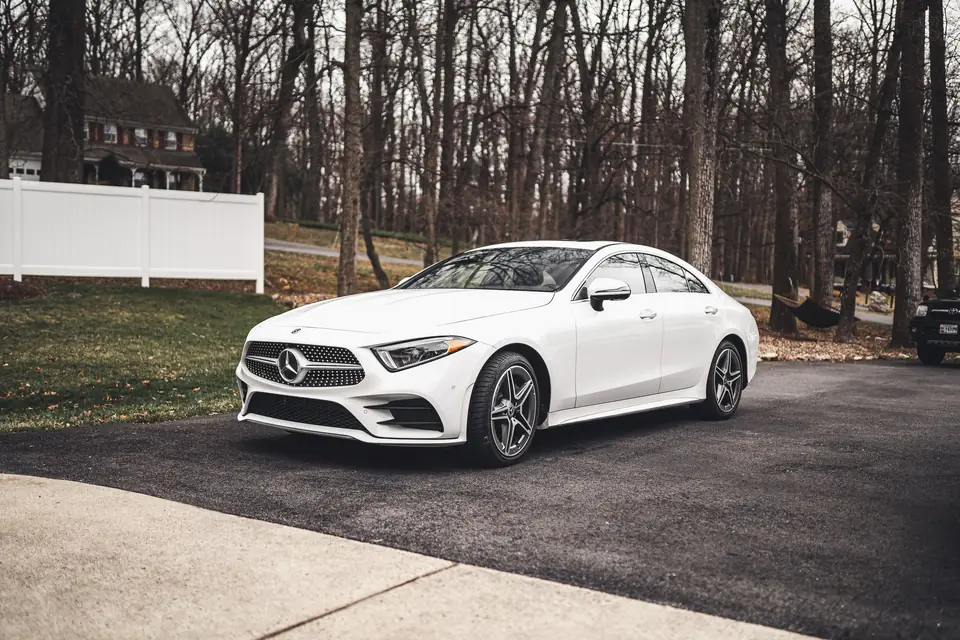
Premium cars attract finance deals and, sadly, thieves. Check the plate however good the car looks on the drive.
Check a UK plateIf you just want the basics on a plate, the car reg lookup page shows what each line of the free result means. If you’re buying, keep reading.
That’s a lot of cars changing hands, and each one carries a registration that opens its DVLA record and MOT history. Plates move between cars, get copied, and get swapped for private numbers. The car underneath stays the same, and so do the records filed against it.
That’s the point of checking the plate rather than trusting it: a plate is easy to change, the history isn’t. The number plate check page goes into what happens to the records when a plate moves.

How long have you owned it? Is there finance on it? Has it been in an accident? Then check the answers against the report.
A copy of a real plate, fitted to a similar car. The free details look right because they belong to the real car. Colour, engine size and the VIN in the full report catch it. Our guide to cloned number plates explains the signs.
Perfectly legal, and common. It also hides the year, so a 2012 car can look newer than it is. The first registration date is on the free result.
Rare, and serious. The police stolen marker is in the full report and the stolen car check page says what to do if it shows.
A lender can own the car the seller is offering you. The full report names the lender, and the car finance check page explains how to settle it safely.
A repaired Category S or N car with a new plate looks like any other. The insurer’s record follows the car; a car write-off check finds it.
The MOT readings on the free result show it, unless the car has had no MOT since. Our mileage check page shows how to read them.
Every registration the car has carried, with dates. If you’re buying or selling a private plate, our guide on private plate transfers explains V778 and retention.
HP, conditional sale or PCP agreements and the lender’s name. Car finance check
Today’s A, B, S and N, or C and D on older claims. Write-off check
From the Police National Computer, when you run the report. Stolen car check
To match the car, not just the plate.
How many keepers, and any recorded respray.
Together, finance, write-off, the stolen marker and the mileage are what most buyers call an HPI check, and our HPI check page explains each one. On top of those: a flag on odd mileage, import, export and scrap records, risk markers, signs of taxi use, log book dates, earlier searches, the maker’s spec and the recorded VED band. See everything we check, or open the sample report.
Police, DVLA, new plates and fines in the order GOV.UK sets out, plus how stolen differs from cloned.
Exact measurements, the myths that cost people fines, and what fails an MOT.
What cherished and dateless mean, what you own when you buy one, and the checks to run before you pay.
Four bodies hold what you’ll read. The DVLA keeps the vehicle record. The DVSA keeps MOT results. Lenders and insurers keep finance and write-off records, and the police keep the stolen marker. The plate ties them together.
| Record | Free / full | Comes from | Meaning |
|---|---|---|---|
| What the car is: make, colour, engine, fuel, first registration | Free | DVLA vehicle record | Does the plate fit the car? |
| Tax status, SORN | Free | DVLA vehicle record | Whether it’s road legal on tax |
| MOT expiry and test history | Free | DVSA test records | How the car fared at every test |
| Mileage readings | Free | DVSA MOT records | Whether the miles add up |
| ULEZ | Free | Fuel type and emissions on the DVLA record | Daily charge in London or not |
| Earlier plates | Full report | DVLA data, licensed feed | Private plates on and off; cloning clues |
| Keepers, V5C dates, colour changes | Full report | DVLA data, licensed feed | How often it has been sold on |
| Outstanding finance | Full report | Lenders, licensed feed | Whether someone else owns it |
| Write-off category | Full report | Insurers, licensed feed | Past damage and repair status |
| Stolen marker | Full report | Police National Computer, licensed feed | A live theft report, if any |
| VIN, engine number, imported, exported, scrapped | Full report | Vehicle identity records | Whether the car is what it claims |
For a quick answer on tax, MOT or ULEZ, yes, and for most owners checking their own car that’s all they need. For buying, no. The DVLA and DVSA don’t know whether a lender owns the car or whether an insurer once paid out on it, and a cloned plate passes the free check because the details belong to a real car. The full report is the part that compares the car’s identity, not just its plate, with the records.
GOV.UK tells used car buyers to hold the V5C up for its DVL watermark, check what it says against what the seller has said, and find the VIN and engine number on the car to compare. With a plate in mind, add these:
Start with anything that could cost you the car: a stolen marker or live finance. Then identity: does the VIN match, are the plate changes explained? Then condition and value: write-off category, MOT advisories, mileage. Most cars come back clear, and that’s a useful answer too, because it narrows the remaining questions to the test drive and the paperwork.
Plate changes need context. One private plate put on and later taken off is ordinary. Several changes in a short time, especially near a write-off or a keeper change, deserve a direct question. Our guide to spotting a cloned car covers the patterns.
Number plates. Plates must be made by a registered supplier and meet the British Standard. Displaying a plate that doesn’t belong to the vehicle is an offence, and a cloned plate can land the real keeper with someone else’s fines.
Finance. A private buyer who honestly didn’t know a car was still on HP or conditional sale may be given good title under the 1964 Hire Purchase Act (Part III). It doesn’t help traders, and Citizens Advice still advises checking first rather than relying on it.
Stolen cars. A stolen car remains the property of its owner or their insurer, even after you’ve paid. The police can recover it.
On the road. Using a car without a current MOT can cost up to £1,000 according to GOV.UK, and a car that’s neither insured nor declared SORN can bring a £100 fixed penalty, with the risk of the car being clamped or impounded.
People search for the same thing in a dozen ways: reg plate check, registration plate check, number plate check, car reg check, plate lookup. They all start from the plate. What changes is the question behind the search, so each of our pages answers one of them properly.
| Your question | The page that answers it |
|---|---|
| What has happened to this car, and is it safe to buy? | Reg check |
| Has this plate moved between cars, or been cloned? | Number plate check |
| What car is this plate on? | Car reg lookup |
| What does the DVLA hold on it? | DVLA check |
| When is the MOT due, and what did the last tests find? | MOT check |
| What’s the tax status, and the yearly cost? | Car tax check |
| Will it be charged in London’s ULEZ? | ULEZ check |
| Is the car under the plate the one the records describe? | Car check by plate |
| Is it reported stolen? | Stolen car check |
| Is it HPI clear: no finance, write-off or theft? | HPI check |
| Is money still owed to a lender? | Car finance check |
| Has the mileage been wound back? | Mileage check |
Every one of them uses the same search box and the same free result. The full report is the same too, whichever page you start from.
Most plate lookups aren’t about buying at all. Owners check when the MOT runs out, whether the tax renewal went through, or whether their car will be charged in a clean air zone. The free result answers all three on one screen.
Two other reasons come up. If you’ve put a private plate on or taken one off, the lookup confirms the DVLA has the new number against your car. And if a penalty letter arrives for a place you’ve never driven, your plate may have been copied. Keep evidence of where your car was, report it to the police, and tell the DVLA. Our guide to cloned number plates walks through it. Selling soon? Run the check as your buyer will, so nothing on the record surprises either of you.
Looking up a plate is free. Each full report is for a single registration, bought with one payment; it appears on screen once paid and lands in your inbox too.
Full report
£11.99
One car, paid once. VAT included, no subscription, no account.
Start with the registrationThe basic check (MOT history, mileage, tax and vehicle details) stays free.
Paying, VAT and receipts are covered on the prices page; refunds, the data guarantee and privacy are answered in our HPI check FAQs.
Yes for the DVLA details, tax, MOT tests with their mileage and the ULEZ answer, with no sign-up. Plate history, finance, write-offs and theft sit in the paid report.
No. That information goes only to people the DVLA accepts have reasonable cause. What our full report gives is a keeper count, with no names.
Since 2001, the plate’s middle digits tell you the half-year. A private plate hides it, so check the first registration date on the free result. The number plate year guide has the full table.
Yes, in the full report, with the date each change was recorded.
Compare the free details with the car: colour, engine size, model. Then match the VIN in the full report with the car. Our guide to cloned number plates explains what to do next.
No. The history stays with the car. The full report links the old and new plates. A worked example is on the car history check page.
Yes. Northern Irish cars sit on the same DVLA record, and their test history runs from 2017.
No. We don’t sell or value plates. The check is about the car the plate is on.
Use the contact page giving the plate and your checkout email address.